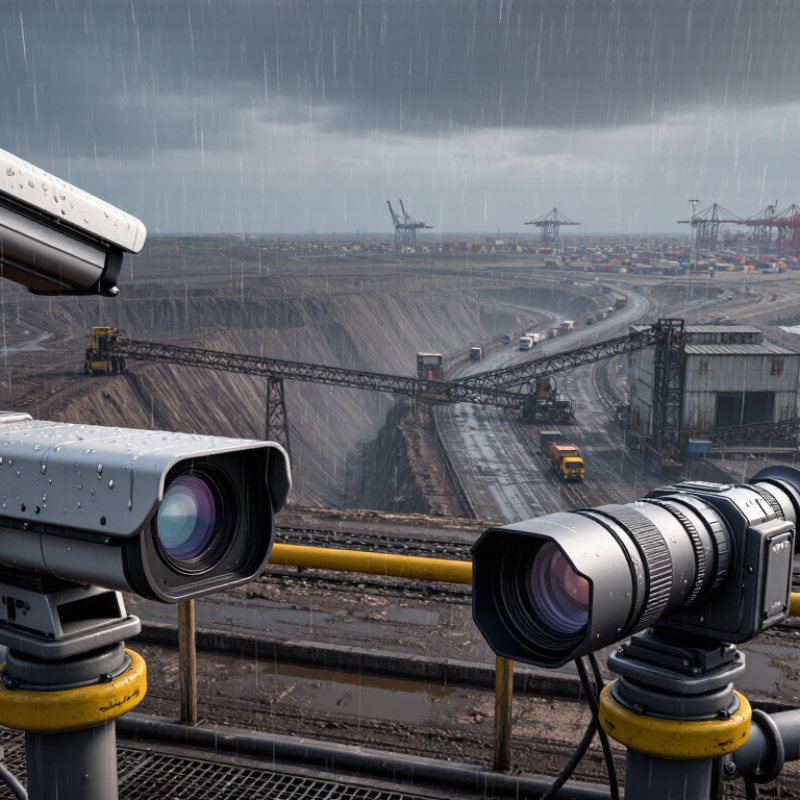
Choosing China’s top Heavy Duty Camera manufacturers requires more than comparing resolution or product prices. These cameras work in harsh places: open-pit mines, coastal ports, highways, factories, and construction sites. Dust settles on the housing. Rain strikes the lens. Heavy vibration tests every bracket and connector.
John Honovich, founder of IPVM and a respected video-surveillance industry analyst, has often emphasized, “The camera is only one part of a surveillance system.” That principle matters here. A strong manufacturer must deliver dependable imaging, stable firmware, useful analytics, and responsive technical support. Hikvision, Dahua, Uniview, Tiandy, and Sunell are among the Chinese brands commonly considered for demanding surveillance applications. Their strengths differ. Some focus on long-range infrared imaging. Others provide thermal options, rugged PTZ platforms, or advanced edge analytics.
The evaluation should begin with practical evidence. Check IP66 or IP67 protection, impact resistance, operating temperature, vibration performance, and night-time clarity. A specification sheet is not enough. Ask for field-test records, warranty terms, replacement procedures, and cybersecurity documentation. Also examine whether the manufacturer supports integration with existing video management systems.
The “best” choice is rarely universal. A mine may need thermal detection and anti-corrosion materials. A roadside project may value optical zoom and image stabilization more. Some product claims sound impressive, yet real performance can weaken in rain, glare, or darkness. That is where careful testing matters. This guide compares leading Chinese manufacturers through measurable durability, image quality, engineering experience, service reliability, and total ownership value. Steady performance matters most.
What Defines a Heavy-Duty Camera Manufacturer in China?
A heavy-duty camera manufacturer in China is defined by more than a reinforced housing. It must understand dust, vibration, heat, moisture, and continuous operation. In factory visits, practical details matter. Engineers test sealed enclosures, cable glands, connectors, and mounting brackets under repeated stress. A camera that survives one laboratory test may still fail beside a crusher or furnace.
Reliable manufacturers usually control key stages, from optical design and sensor selection to assembly and final inspection. They document test procedures instead of making broad durability claims. Useful evidence includes ingress protection reports, temperature records, vibration results, and traceable batch data. Experienced teams also adapt lenses, housings, and communication interfaces to the site. This is where technical knowledge becomes visible. A clear service process matters too. It should cover firmware updates, spare parts, calibration, and response times.
Strong suppliers ask difficult questions before quoting. What is the lighting range? How much vibration reaches the mount? Will operators need thermal imaging, remote focus, or low-latency video? Honest communication is part of reliability. No product fits every site. Some manufacturers may overlook long cable losses or condensation inside a housing. That weakness deserves open review, not polished wording. Buyers should inspect samples, verify records, and speak with engineers who have solved similar field problems.
Key Technologies Used in China’s Heavy-Duty Camera Industry
What Are China’s Top Heavy-Duty Camera Manufacturers?
Key Technologies Used in China’s Heavy-Duty Camera Industry
China’s heavy-duty camera manufacturers increasingly compete through engineering, not housings alone. Rugged IP67 and IP68 enclosures protect sensors from dust, rain, washdown water, and vibration. Thermal management is equally important. Some designs use aluminum heat paths, sealed connectors, and low-light CMOS sensors with wide dynamic range. These features matter beside furnaces, loading bays, ports, and unlit roads.
Edge artificial intelligence is becoming a practical differentiator. Cameras can classify vehicles, detect smoke, and identify unsafe movement without sending every frame to a server. MarketsandMarkets estimates the global video surveillance market will grow from about 54.4 billion dollars in 2024 to 83.3 billion dollars by 2029. That expansion increases demand for local processing, efficient video compression, and reliable storage. China’s Ministry of Industry and Information Technology reported 3.377 million 5G base stations by the end of 2023. Faster industrial networks support remote monitoring and multi-camera coordination, although coverage remains uneven outside major facilities.
A higher resolution is not always better. It can increase bandwidth, heat, and storage costs. Field tests still expose weak night performance, unstable firmware, or false alarms. Useful systems combine infrared illumination, thermal imaging, electronic image stabilization, and secure firmware updates. Independent testing should measure detection accuracy, operating temperature, latency, and failure recovery. Specifications help, but they do not replace months of field evidence.
Leading Chinese Manufacturers of Heavy-Duty Cameras
Leading Chinese Manufacturers of Heavy-Duty Cameras
China’s leading heavy-duty camera manufacturers serve mining, ports, factories, transport hubs, and outdoor infrastructure. Their products are designed for dust, rain, vibration, heat, and continuous operation. Many manufacturers offer rugged housings made from aluminum alloy or stainless steel. Some models support IP66 or IP67 protection, while specialized units provide stronger impact resistance.
Experienced buyers should examine more than resolution. A reliable camera needs stable night imaging, accurate autofocus, wide temperature tolerance, and dependable network transmission. Thermal cameras can detect overheating equipment before visible damage appears. Infrared systems help operators monitor dark yards and enclosed spaces. Useful technical details include sensor size, lens range, operating temperature, vibration testing, and storage options.
Field testing matters.
Leading Chinese manufacturers often provide customized lenses, mounting systems, communication interfaces, and software integration. This flexibility helps when standard equipment cannot cover a long conveyor or moving vehicle. However, product pages may not reveal enough about long-term failure rates, maintenance costs, or firmware support. That is where careful evaluation becomes necessary. Request test reports, inspect sample images, and run trial units in real weather. A camera may perform well in a showroom but struggle under dust, glare, or constant vibration. Certification also deserves attention, especially for projects involving strict procurement or export requirements. Reliable suppliers explain limitations clearly instead of promising perfect performance.
How to Compare China’s Heavy-Duty Camera Suppliers
Comparing China’s heavy-duty camera suppliers requires more than checking product photos. Start with the operating scene, not the catalog. A camera beside a dusty conveyor needs different protection from one mounted on a coastal pier. Ask for the exact enclosure rating, operating temperature, vibration limits, and lens options. Reliable suppliers provide test reports, material details, and sample units before a large order. Paper claims are not enough. Check whether the stated rating covers the complete camera assembly, not only its housing.
Technical expertise appears in the image performance. Request sample footage from low light, glare, rain, and moving equipment. Examine focus stability, infrared clarity, frame consistency, and compression quality. A strong supplier should explain sensor selection, heat management, cable sealing, and remote maintenance in practical language. Ask how firmware updates are controlled and how faults are diagnosed. Vague answers often signal weak engineering support. Still, test conditions can differ from your site. That is an easy mistake.
Supplier reliability also depends on manufacturing discipline. Review production records, inspection checkpoints, spare-part availability, and warranty handling. Ask whether the supplier can maintain the same components across repeated orders. A factory visit or live video inspection can reveal storage conditions and assembly quality. Look for clean cable routing, firm connectors, and consistent screw torque. Small details matter. Compare response times, customization limits, packaging protection, and delivery records. No supplier is perfect, and an attractive quotation may hide expensive integration work. Leave room for a pilot order and challenge your own assumptions before scaling.
Major Applications of Heavy-Duty Cameras in Industrial Fields
What Are China Top Heavy Duty Camera Manufacturers?
China’s top heavy-duty camera manufacturers serve demanding industrial environments, not ordinary office surveillance. Their systems monitor steel lines, ports, mines, warehouses, and automated production cells. The International Federation of Robotics reported 541,302 industrial robots installed worldwide in 2023. That 10% annual increase strengthens demand for machine vision, robotic guidance, and safety monitoring.
Dust is unforgiving. Heat changes everything. Cameras near furnaces need thermal management, sealed housings, and stable image output. In mining areas, rugged cameras support conveyor inspection, vehicle monitoring, and remote equipment checks. In ports, they track containers under rain, vibration, and changing light. The 2024 MarketsandMarkets machine vision report estimates this market could grow from about 13.2 billion dollars in 2023 to 17.2 billion dollars by 2028. This growth reflects wider use in quality control and automated logistics.
Industrial buyers should examine IP ratings, shock resistance, low-light performance, and operating temperature ranges. Stainless-steel housings can reduce corrosion risks near chemicals or coastal air. Infrared illumination helps inspect dark conveyor routes, but reflective metal may create false details. That issue is often underestimated. A camera can deliver sharp images yet fail when lenses collect dust or software misreads glare. Field testing remains essential. Installation records, calibration procedures, and replacement-part availability also reveal a manufacturer’s practical reliability. Data sheets look perfect; factories are not.
Conclusion
China’s heavy-duty camera industry is defined by manufacturers that combine rugged construction, dependable imaging, advanced connectivity, and consistent quality control. A Heavy Duty Camera is typically designed to operate in demanding environments, such as areas exposed to dust, moisture, vibration, temperature changes, or continuous industrial use. Key technologies include reinforced housings, high-resolution sensors, infrared or low-light imaging, intelligent video analysis, remote monitoring, thermal management, and flexible network integration. Leading Chinese manufacturers are often distinguished by their engineering capabilities, production scale, customization services, testing procedures, and ability to support different industrial requirements.
When comparing suppliers, buyers should evaluate product durability, image performance, protection ratings, software compatibility, certification support, delivery capacity, technical assistance, and total ownership cost rather than focusing only on the initial price. Heavy-duty cameras are widely applied in manufacturing, transportation, energy, construction, logistics, infrastructure inspection, and other industrial fields. Selecting the right supplier requires matching camera specifications with operating conditions, installation needs, maintenance expectations, and long-term project goals.
 Xiyue Electronics
