Choosing a Vehicle Mounted Camera is not simply a matter of selecting the highest resolution. Global buyers face different roads, climates, vehicle designs, and operating expectations. A delivery van may need a forward-facing dash camera, while a bus benefits from multi-camera coverage and a wide interior view. Construction vehicles often require rugged housings, vibration resistance, and dependable night performance. Details matter.
Richard Bishop, an established autonomous-vehicle industry analyst, observes, “A camera is only as useful as the system around it.” This principle helps explain why image quality alone can mislead buyers. Lens angle, low-light sensitivity, frame stability, storage capacity, and connection reliability should be evaluated together. A 4K camera may capture sharp signs, yet poor exposure can hide a cyclist at dusk. A compact model may fit neatly behind a windshield, but excessive heat can shorten its service life.
This guide examines common Vehicle Mounted Camera types for international purchasing teams, fleet managers, vehicle manufacturers, and security professionals. It considers forward-view, rear-view, side-view, 360-degree, cabin-monitoring, and specialized off-road cameras. Mounting position matters. So does maintenance access. Buyers should also review product documentation, data handling practices, warranty terms, and regional installation requirements.
There is no universal winner. That assumption can fail.
The right choice depends on the vehicle’s mission, route conditions, operating temperature, and required evidence quality. Some buyers may also underestimate installation complexity. A reliable camera is not merely visible on the vehicle; it must remain stable, readable, and useful after months of vibration, rain, dust, and changing light.
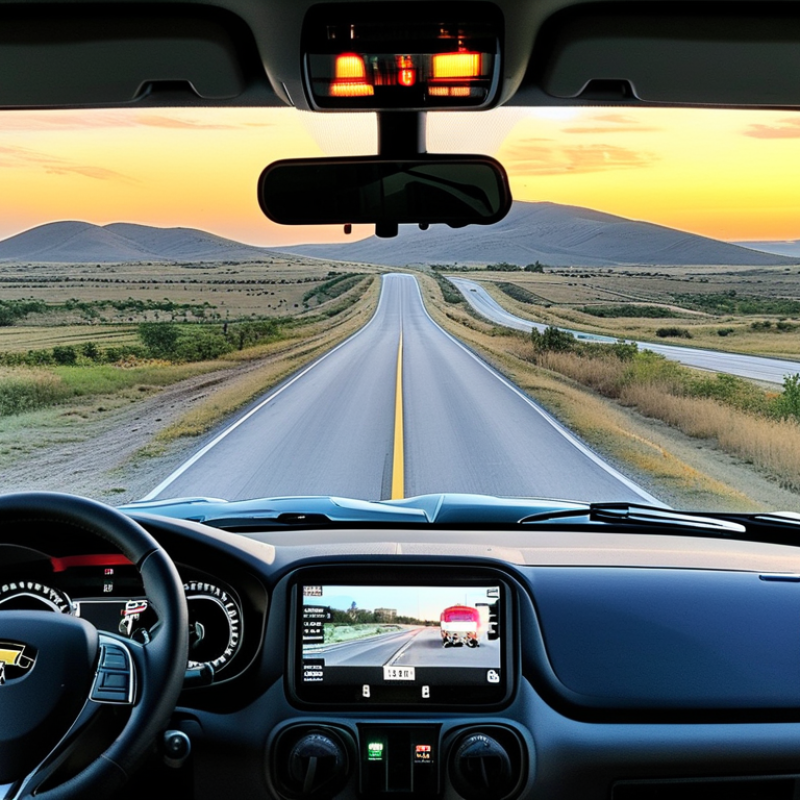
Vehicle-mounted cameras turn surrounding motion into usable visual information. The main types include front-view, rear-view, side-view, cabin, and multi-camera systems. Each serves a different field of vision. A front camera supports lane observation and obstacle awareness. A rear camera helps drivers judge distance while reversing. Side cameras reduce blind zones during turns or lane changes. Cabin cameras can monitor driver attention, but their use requires careful privacy management.
The World Health Organization’s Global Status Report on Road Safety 2023 records about 1.19 million annual road deaths worldwide. This figure explains why reliable visual assistance matters. In the United States, the National Highway Traffic Safety Administration estimated that rear visibility systems could prevent 58 to 69 deaths and 42,000 injuries each year. Core functions now include wide-angle imaging, low-light capture, high-dynamic-range processing, recording, and real-time display. Some systems also provide object detection or lane warnings. These features assist decisions. They do not replace attentive driving.
Installation quality often decides performance. A poorly angled lens can hide a cyclist or distort distance. Dust matters. So does rain. Regular cleaning, vibration testing, and calibration should be part of fleet maintenance. Camera latency can also create misleading confidence, especially during fast maneuvers. The best evaluation checks field of view, image clarity, mounting strength, storage security, and compatibility with the vehicle’s electrical system. Industry reports often emphasize market growth, but practical testing remains more convincing. A camera can be advanced and still fail when its lens is blocked.
Vehicle-mounted cameras serve different jobs, so application should guide the buying decision. A forward-facing dash camera records road events through the windshield. It suits private vehicles, delivery vans, and long-distance transport. A rear-view camera helps drivers judge tight spaces, loading areas, and reversing distances. Side cameras reduce blind spots during lane changes and trailer turns. These systems work best when the lens stays clean and the display remains easy to read.
For fleet operations, multi-camera systems provide wider coverage around buses, trucks, and service vehicles. Cabin cameras can monitor driver attention, but privacy settings require careful planning. Rugged cameras fit construction, agricultural, and off-road vehicles. They need stronger housings, vibration resistance, and stable performance in dust or rain. Low-light capability also matters in tunnels, warehouses, and early-morning routes. In practice, image quality may drop when headlights reflect from wet roads. No setup is perfect.
Tips: Match the camera to its viewing area. Check mounting strength, operating temperature, night performance, and storage capacity. Test the system on the actual vehicle before wider installation. A wide lens can reveal more, but it may make distant objects look smaller. Review footage regularly. Small blind spots are easy to overlook. Consider local data-protection requirements, especially when cameras record inside cabins or near public areas. Clear access controls and limited retention can improve reliability and user trust.
Choosing a vehicle-mounted camera starts with the work environment, not the sales brochure. Front-facing cameras support road visibility, while cabin and rear cameras cover blind areas. Multi-camera systems offer wider evidence, but they require more storage and careful installation.
Image quality matters beyond pixel count. Test footage in bright sunlight, tunnels, rain, and low light. A useful system keeps license plates and road markings readable without excessive glare. Check the viewing angle too. A very wide lens may capture more space, but it can distort distance. That detail is easy to miss.
Storage performance deserves equal attention. Compare local memory, removable storage, and optional remote access. Confirm recording duration at the chosen resolution. Look for loop recording, impact-triggered protection, and stable file recovery after power loss. GPS can add location and speed data, while a reliable microphone may clarify events inside the vehicle. However, audio is not always necessary, and it may create privacy concerns in some regions. Review local requirements before enabling it.
Buyers should also examine operating temperature, vibration resistance, water protection, and cable durability. A camera that performs well on a showroom table may fail on rough roads. Installation should not block the driver’s view or interfere with vehicle controls. Test the system after installation. Recheck it later. Small alignment errors can weaken useful footage, and I have found that “almost correct” is often not good enough. Support quality, firmware updates, warranty terms, and replacement access can determine long-term reliability more than impressive specifications.
| Camera Type | Typical Resolution | Signal & Connectivity | Night / Low-Light Capability | Typical Field of View | Weather & Vibration Protection | Storage & Integration | Key Advantages | Main Limitations | Recommended Vehicle Applications |
|---|---|---|---|---|---|---|---|---|---|
| Analog HD Camera | 720p to 1080p | Coaxial cable; commonly supports long cable runs with suitable vehicle-grade wiring and power distribution | Infrared illumination is common; image quality depends strongly on sensor size and lens design | Approximately 90° to 120° for common fixed lenses | Typically available with IP66 or IP67 housings; select models include vibration-resistant mounts | Requires a compatible digital video recorder or monitor; simple to add to existing systems | Low initial cost, straightforward installation, and broad compatibility with legacy systems | Lower scalability and fewer advanced analytics options than network cameras | Basic reversing, side-view, loading-area, bus, truck, and construction-vehicle monitoring |
| Network IP Camera | 2MP to 8MP; 1080p and 4MP are common for vehicle surveillance | Ethernet, commonly using PoE; vehicle networks may also use mobile broadband gateways | Low-light sensors, wide dynamic range, and infrared illumination are widely available | Approximately 90° to 140° depending on lens and sensor format | IP66 to IP69K options are available; industrial versions may include wide-temperature operation | Supports network video recorders, edge storage, mobile gateways, and video management software | High image quality, flexible system expansion, remote access, and easier software integration | Requires careful network design, cybersecurity controls, and stable power regulation | Fleet monitoring, public transport, logistics vehicles, emergency vehicles, and commercial fleets |
| Wide-Angle or Fisheye Camera | 2MP to 8MP, depending on the required dewarped image quality | Analog HD or IP; IP versions provide better digital correction and viewing flexibility | Available with infrared or enhanced low-light sensors; image edges may be less detailed | Approximately 180° to 360° depending on the optical design | Usually offered in IP66 or higher enclosures for external vehicle mounting | Requires dewarping software or a recorder that supports panoramic viewing modes | Covers large areas with fewer cameras and reduces blind zones around the vehicle | Geometric distortion and reduced detail at the far edges of the image | Vehicle perimeter awareness, buses, refuse trucks, forklifts, trailers, and large machinery |
| PTZ Camera | 2MP to 4MP is common; higher resolutions are available for long-range observation | Primarily IP; control may use network commands or serial interfaces on some systems | Optical zoom, infrared illumination, and electronic image stabilization may be available | Pan coverage up to 360°; tilt and optical zoom vary by model | Outdoor versions commonly use IP66 or IP67 protection; shock and vibration ratings must be checked separately | Integrates with network recorders, control consoles, GPS systems, and event-based recording software | Remote directional viewing, optical zoom, preset patrols, and long-range inspection | Higher cost, greater power consumption, and possible blind spots while the camera is facing elsewhere | Security patrol vehicles, municipal fleets, inspection vehicles, ports, airports, and large worksites |
| Thermal Imaging Camera | Commonly 320 × 256 or 640 × 512 thermal pixels | Digital video, Ethernet, or vehicle-specific interfaces; some systems combine thermal and visible channels | Detects heat signatures in darkness, smoke, haze, and some low-visibility conditions; it does not require visible light | Approximately 18° to 60° for many vehicle-mounted lenses | Rugged outdoor housings are available; installation should account for thermal window material and heat management | Can connect to onboard recorders, alarm systems, display units, and analytics platforms | Strong detection of people, animals, vehicles, and overheated components in poor visibility | Usually provides less texture and color information than visible-light cameras; higher purchase cost | Firefighting, border patrol, wildlife monitoring, night security, industrial inspection, and search operations |
| Driver Monitoring Camera | 720p to 1080p is typical for interior monitoring | USB, Ethernet, or dedicated in-vehicle interfaces; often connected to an edge-processing unit | Near-infrared illumination is commonly used for face and eye monitoring in darkness | Approximately 60° to 100° to cover the driver area | Designed mainly for protected cabins; mounting stability and lens cleanliness are important | May support local event storage, fleet software, and fatigue or distraction detection algorithms | Supports detection of drowsiness, distraction, seat-belt use, and unsafe driver behavior | Requires privacy controls, suitable data retention policies, and reliable calibration | Trucks, buses, taxis, delivery fleets, mining vehicles, and heavy equipment |
| License Plate Recognition Camera | 2MP to 8MP; effective performance depends on shutter speed, lens selection, and mounting geometry | Usually IP with onboard processing or connection to a recognition server | Infrared lighting and short exposure times help reduce motion blur and plate glare | Often narrower, approximately 15° to 40°, to concentrate pixels on the plate area | Outdoor housings commonly use IP66 or IP67 protection; transparent windows must be kept clean | Integrates with access control, vehicle databases, event logs, and fleet management systems | Captures plate information for access control, tolling, parking, and vehicle identification | Requires correct angle, distance, speed, illumination, and compliance with local privacy regulations | Parking enforcement, toll vehicles, gates, logistics yards, and security patrols |
| Multi-Camera Surround-View System | Typically four or more cameras at 720p to 1080p; stitched output depends on system processing | Dedicated video links or IP connections to a central processing unit and in-cabin display | Low-light sensors and infrared support may be included for nighttime maneuvering | Combined coverage can approach 360° around the vehicle | External cameras commonly use IP67 or higher; calibration must withstand vibration and body movement | Uses a dedicated controller for image stitching, recording, calibration, and display output | Reduces blind zones and provides a practical bird's-eye view for maneuvering | Installation and calibration are more complex; image quality depends on accurate camera alignment | Heavy trucks, buses, agricultural machinery, forklifts, mining vehicles, and utility fleets |
Note: Specifications represent common market ranges for vehicle-mounted systems. Actual performance depends on sensor size, lens selection, illumination, mounting position, cable quality, recorder compatibility, environmental conditions, and applicable regional regulations.
Top Vehicle Mounted Camera Types for Global Buyers
Vehicle-mounted cameras vary by working environment, vehicle design, and regional expectations. Front cameras support driver visibility and collision recording. Rear cameras help with reversing near loading bays, narrow streets, and crowded sites. Side cameras reduce blind spots on buses, trucks, and utility vehicles. For larger fleets, a 360-degree system can combine several views into one monitor.
Compatibility requires more than matching screen size. Check the vehicle’s voltage range, connector type, video signal, mounting space, and display resolution. Some regions use left-hand traffic, while others use right-hand traffic. This difference affects camera placement and viewing angles. A camera fitted on the wrong side may leave a dangerous blind area. Small details matter.
Weather conditions also change the buying decision. Coastal fleets may need stronger corrosion resistance, while cold regions require stable operation during freezing starts. Dusty roads call for sealed housings and protected connectors. Confirm local requirements for recording, storage, driver visibility, and personal data before installation. Rules differ between countries and sometimes between cities. Practical testing is essential. Installers should check night images, vibration resistance, cable routing, and heat performance on the actual vehicle. We once found that a technically compatible camera produced glare from a curved windshield. The specification looked correct, but the installation still needed adjustment.
Regional requirements and compatibility priorities for common commercial vehicle deployments
The chart compares typical procurement priorities on a five-point scale, including weather resistance, low-light performance, wide coverage, driver privacy, and integration with 12 V/24 V vehicle systems. Higher values indicate stronger suitability for the regional operating conditions shown. Actual specifications should be verified against local certification, installation, and data-protection requirements.
Vehicle-mounted cameras should be selected by vehicle function, not appearance. A delivery van may need front and rear cameras for reversing, loading, and narrow streets. A bus often benefits from side cameras and a wide-angle interior view. Heavy trucks require vibration-resistant housings, secure brackets, and lenses that remain stable on uneven roads. A 360-degree system helps with blind spots, but it needs careful calibration around long vehicle bodies.
Operating conditions change the specification. In dusty regions, choose sealed housings with suitable ingress protection. In coastal areas, corrosion-resistant mounts deserve attention. Cold starts, intense sunlight, heavy rain, and sudden temperature changes can affect image quality and cable performance. Infrared support may help at night, but reflective plates or wet surfaces can still create glare. Test the camera at actual mounting height.
Power stability is another practical concern. Construction vehicles may produce vibration and electrical fluctuations, while electric vehicles require compatible power management. Storage capacity should match recording hours and resolution. Higher resolution is not always better if files overload the system. I once underestimated cable movement near a hinged door; repeated flexing caused intermittent footage. That small detail matters. Buyers should also review privacy controls, retention settings, and local data requirements before installation. A clear image is useful only when the complete system remains reliable.
: A forward-facing camera records road events through the windshield. A rear camera helps with reversing near loading bays and narrow streets. Test both views at the actual mounting height.
Uneven roads create constant vibration. Choose strong housings, secure brackets, and stable lenses. Dust, rain, and temperature changes can also affect performance.
Yes. Side cameras reduce blind spots during lane changes and trailer turns. Their value depends on correct placement and calibration. Small blind spots remain possible.
No. A 360-degree system can widen coverage around long vehicles. However, calibration errors may distort nearby objects. Check the view around corners, mirrors, and the rear frame.
Low-light performance helps in tunnels, warehouses, and early routes. Infrared support may improve dark scenes. Wet roads and reflective plates can still create glare.
Dusty areas need sealed housings with suitable protection. Coastal routes may require corrosion-resistant mounts. Cold starts, strong sunlight, rain, and sudden temperature changes can weaken reliability.
Match storage to recording hours and resolution. Higher resolution creates larger files. More detail is not always better.
Use clear access controls and limited footage retention. Cabin recording requires careful planning around driver privacy. Review local data-protection requirements before installation.
Cable movement near a hinged door can cause intermittent footage. Secure flexible sections without restricting movement. I underestimated this once. It mattered.
Vehicle Mounted Camera systems are essential tools for improving visibility, safety, and operational awareness across commercial, industrial, public-service, and private vehicles. This overview explains the basic structure and core functions of these cameras, including recording, monitoring, wide-angle coverage, night visibility, and support for driver assistance. It also introduces major camera types according to application, such as front, rear, side, cabin, cargo-area, and multi-camera systems.
For global buyers, comparing image quality, viewing angle, durability, storage capacity, connectivity, installation method, and compatibility is vital. Regional requirements may affect power standards, weather protection, communication functions, and data management expectations. The most suitable choice depends on vehicle size, operating environment, road conditions, lighting, vibration, temperature, and the level of monitoring required. By evaluating these factors carefully, buyers can select a reliable Vehicle Mounted Camera solution that fits their vehicle configuration, operating conditions, and long-term maintenance needs.
Xiyue Electronics